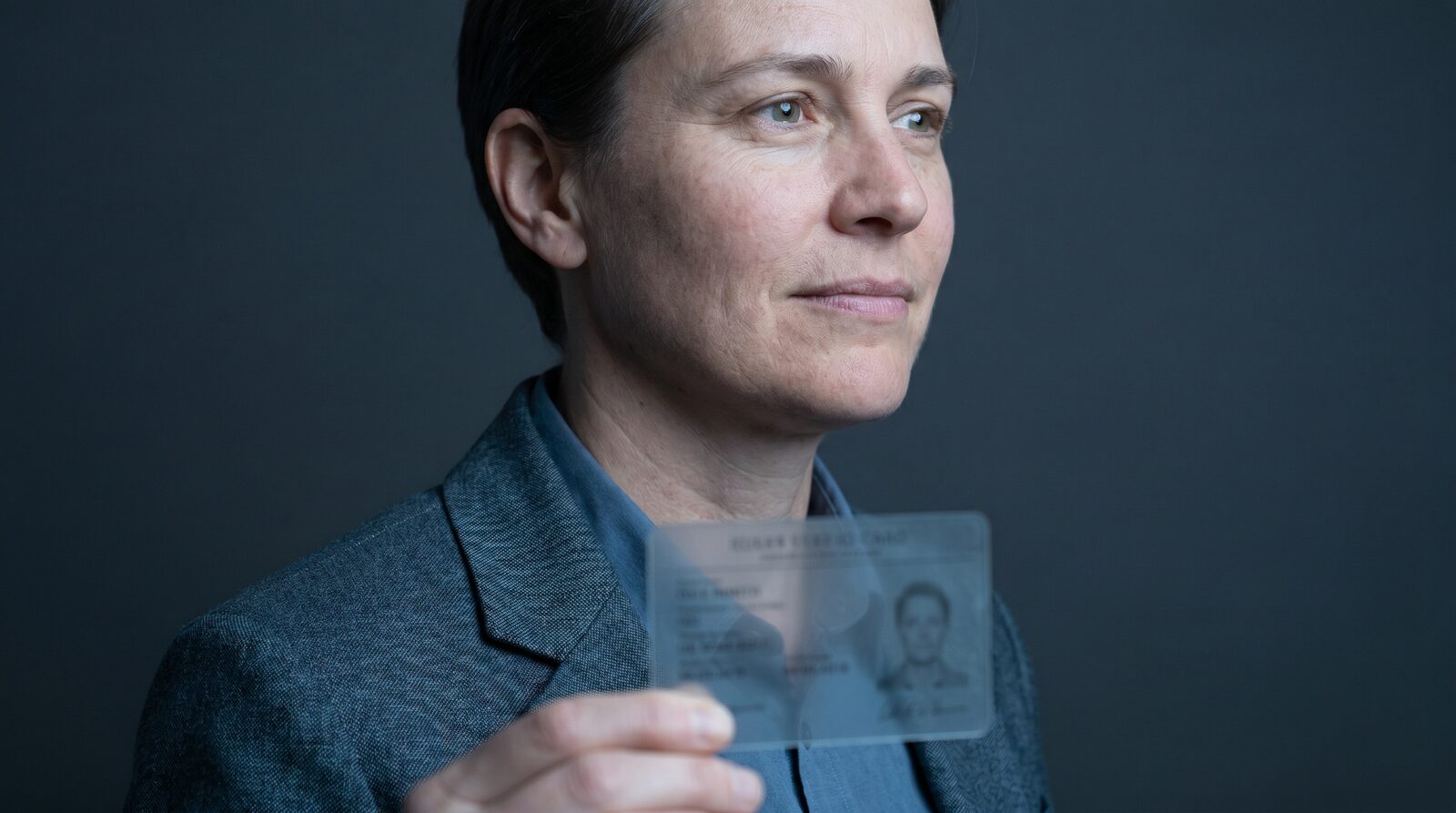
FaceShield: Deepfake Protection for Your Face
Every AI generation platform, including this one, makes it easier to put a face into an image or video. Fewer of them do anything about what happens after: when that face isn't the user's own.
Why this is a real problem, not a hypothetical one
Faces are the easiest thing to lift and the hardest thing to prove was used without permission. A public photo, a video frame, a profile picture: any of it can become a reference image for a generation tool. The person whose face it is usually finds out after the fact, if they find out at all, and by then the image is already circulating.
This isn't a reason to panic about AI generally. It's a reason to want the platform you use to at least know when your face shows up in something generated on it, and to give you a way to say what you do and don't allow. That's a narrower, more honest goal than "stopping deepfakes," and it's the one FaceShield is actually built for.
What FaceShield is
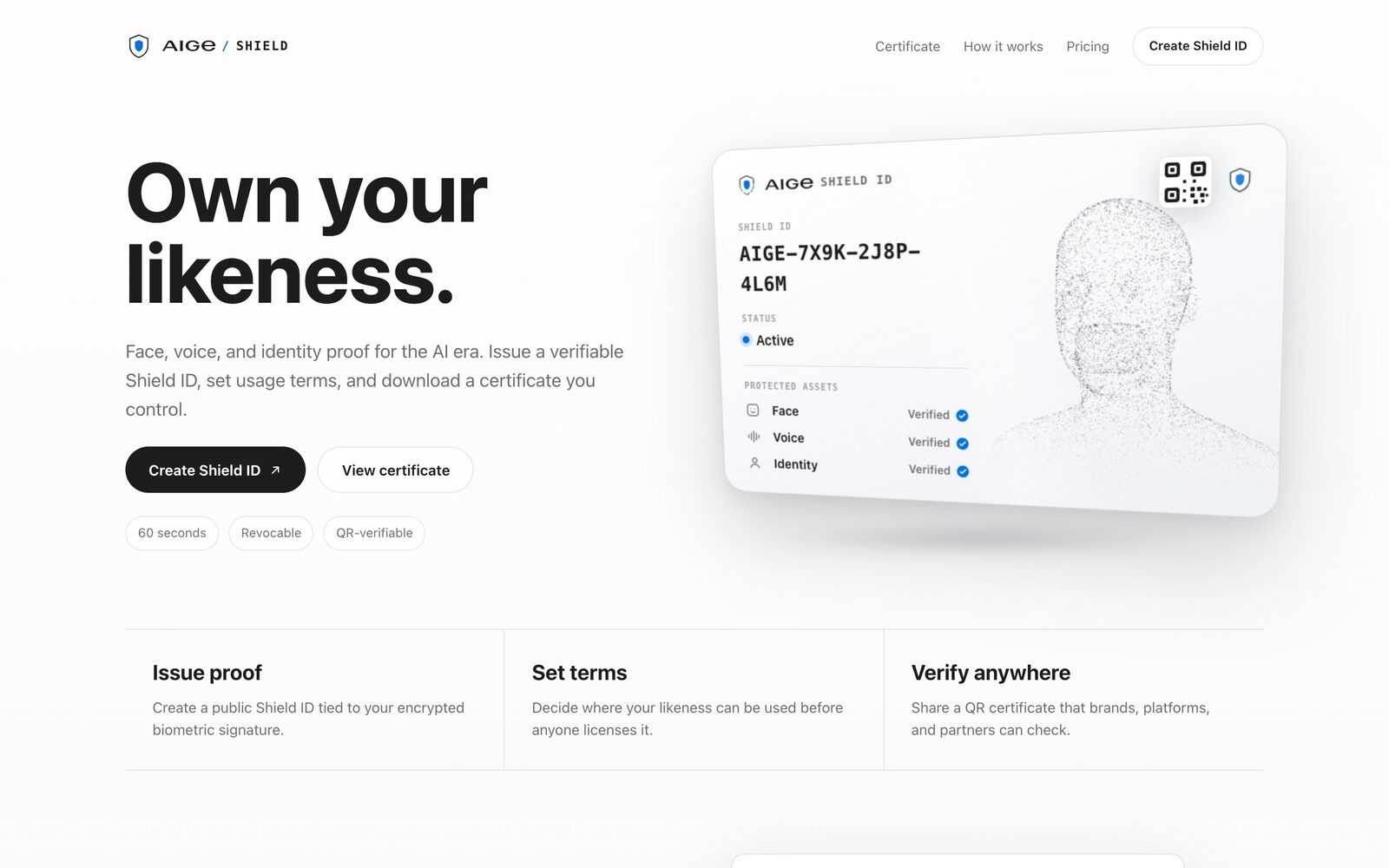
FaceShield is AIGE's identity-registration and detection system, at aige.ws/shield. It does three concrete things:
Registers your face. You upload a handful of selfies and give explicit consent; AIGE extracts a facial signature and stores it as your protected reference.
Watches for matches inside AIGE. When content matching your registered face is published to the AIGORA feed, or run through a manual scan, the system checks it against your signature and flags a match.
Issues a certificate that states your terms. Once registered, you get a license record (personal use, commercial use, AI training, adult content) that you control, and that ships with a cryptographic signature so it can be verified independently.
Registering your face, step by step
The wizard is short by design:
Upload up to five selfies. More angles give the system more to match against, but one clear photo is enough to start.
Confirm biometric consent. You check an explicit box acknowledging that your face data will be processed and stored, and you can withdraw that consent and delete the data later.
Complete a short liveness check. A one-time code appears on screen with a 60-second window, confirming a real person is doing the registration in the moment, not someone re-uploading a photo they found of you.
AIGE extracts your facial signature. A detection model locates your face and converts it into a numeric signature; a quality check rejects blurry or low-confidence uploads rather than silently accepting bad data.
Once status shows "ready," your face is on record. There's no fee for this baseline registration: the light tier is free, with an optional full tier for extras like verified social account links and KYC identity verification.
What happens when someone else uses your face
Two moments trigger a check: when someone publishes an image to the AIGORA social feed, and when a user runs a manual scan on a generation. AIGE compares the image against every registered face signature. If it finds a match, it checks whether the person who generated the content has a valid license for that identity, for example an active rental of that person's digital twin.
If there's no valid license, FaceShield creates a detection record and notifies two people: you, the registered identity owner, and the person who generated or posted the content, letting them know it was flagged as a protected identity. When a new registration goes live, AIGE also runs a look-back scan across recent published posts (roughly the last month) so matches aren't limited to content going forward.
What this deliberately does not do is auto-delete the post or block the generation before it happens. It's a detection-and-notification layer, not a takedown bot. The alert gives both sides a documented record and a clear signal, and it's the license terms on your certificate that define what "unauthorized" means in the first place.
What it honestly can't do
FaceShield protects within AIGE's own pipeline: the AIGORA feed and AIGE's generation and scan tools. It has no way to see what happens on other platforms, other AI tools, or the open internet. If your face is used to generate something on a service that isn't AIGE, this system will never know, because it never sees the image. It's not a search engine for your likeness, and it doesn't claim to be.
It's also not a legal guarantee. A signed certificate documents your stated terms and gives you a verifiable record of when you registered and what you allowed. It's evidence, not a court order. And detection itself has limits: it works on faces it can actually see and match with reasonable confidence, so heavily stylized, obscured, or low-quality images can still slip past, in either direction.
Who this is for
People who already have a public face to protect: models, actors, streamers, and public figures who know their likeness gets used in ways they didn't approve. Creators who license their digital twin to others and want the terms in writing, not just a verbal understanding. And everyday users who'd simply rather know if their face turns up in something generated on AIGE than find out by accident. None of that requires you to stop creating. FaceShield sits alongside generation, it doesn't gate it.
Quick answers
Question | Answer |
|---|---|
What does registering cost? | The base (light) tier is free. A full tier adds social-account verification and KYC identity verification. |
Does it stop a generation from happening? | No. It detects matches after content is published or scanned and notifies both parties, but it doesn't block generation in real time. |
Does it scan the whole internet for my face? | No. It only checks content published to AIGORA's feed or run through AIGE's manual scan, nothing outside the platform. |
What can't it do? | See other platforms, guarantee legal outcomes, or catch every heavily stylized or low-quality match. It's a detection and documentation layer, not a takedown service. |
Can I change my mind later? | Yes. You can withdraw consent and delete your registered face data, and you can update your license terms at any time. |
Do I need to be famous to use it? | No. Registration is open to anyone protecting a real identity or a licensed digital character. |
Do this next
If your face is already out there (on social media, in press photos, anywhere someone could screenshot it), registering takes a few minutes and costs nothing at the base tier. Head to aige.ws/shield, upload your selfies, and set your terms. If you're building a character instead of protecting your own likeness, the same identity system underpins digital twins on AIGE. If you want that character to look consistent across every generation you make, see the guide to consistent AI characters.
Comments
Be the first to comment.