How these were run
These ten come from the generation log of AIGE's image account: runs made in July and August 2026, each stored with its prompt, model and settings. The prompts are copied exactly as they were sent. Each image is the output of that run, shrunk for the web and otherwise untouched.
Where a prompt made more than one image, the page shows the strongest one and says so on the card; every other prompt was a single run. That makes each card one result, not a measure of how often a prompt works. Run any of them again and you get a different image.
Credits are today's AIGE prices for that model and size, read from the same table the studio charges from. The log does not say who started a run, which is why this page speaks of AIGE's log and not of a customer. For which Nano Banana version AIGE's picker runs today, see the dated note on the Nano Banana guide.
The ten prompts
1. Product on a seamless backdrop
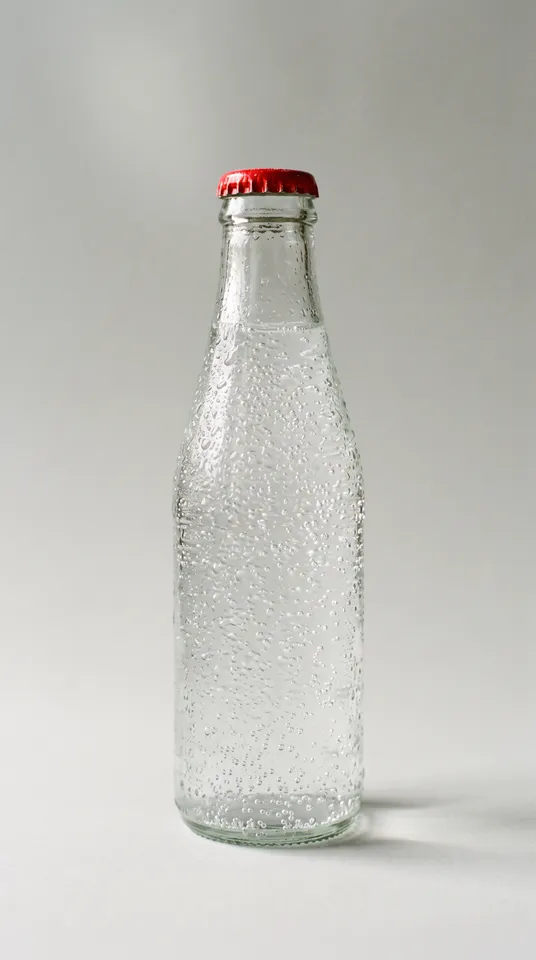
A clear glass bottle of sparkling water with a bright red metal cap and no label, standing centered on a seamless light-grey studio background, soft diffused light from top left, gentle contact shadow, cold condensation beads on the glass, fine bubbles rising inside, hyper-real product photography reference shot, 35mm film grain, muted Kodak tones.
What to take from itOne subject on one backdrop, the light placed by direction (soft and diffused, from the top left) and two physical details that make glass read as real: condensation beads and fine bubbles. It ends on a look: film grain and muted tones.
2. A product with its own name on it
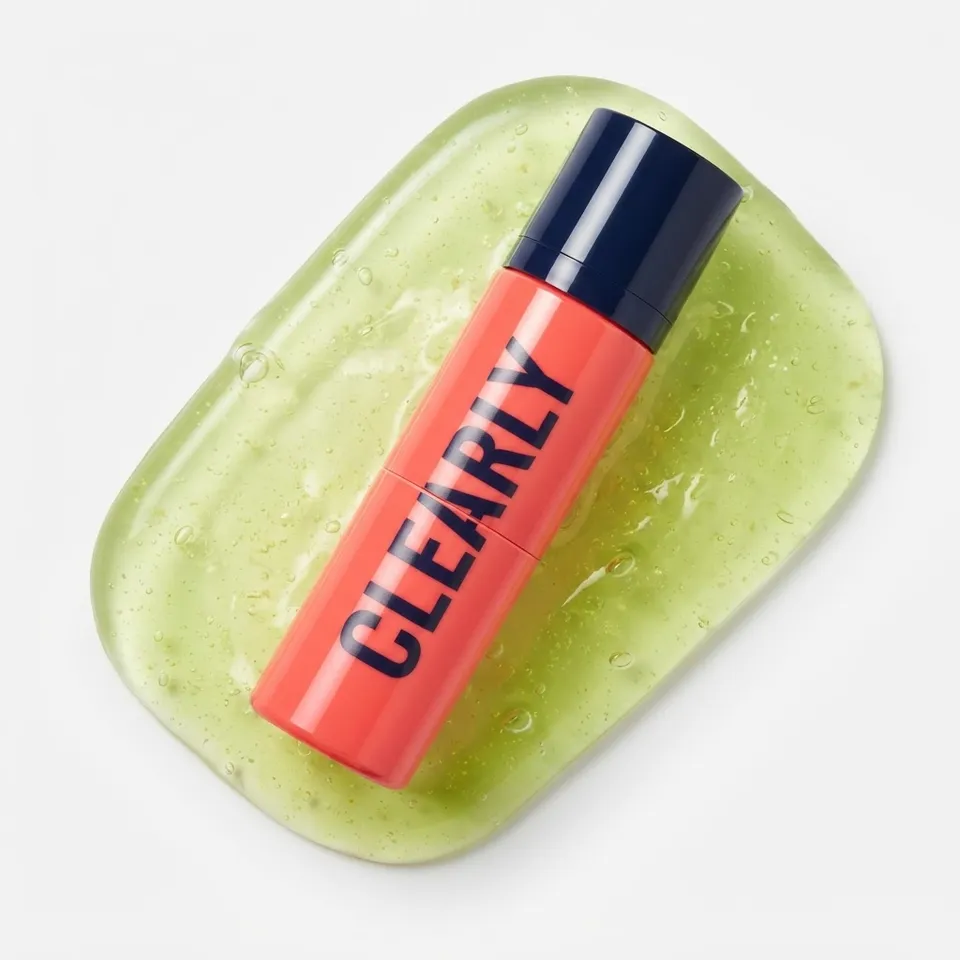
Square product photograph, top-down flat lay. A glossy hot-coral cylindrical serum bottle with a high-gloss ink-navy screw cap, lying diagonally across a slab of thick translucent lime-green gel with soft rounded edges and visible internal air bubbles. On the bottle body, the wordmark CLEARLY runs vertically in an ultra-wide extended sans-serif, ink navy, with a single clean horizontal slice cutting through the middle of every letterform. Bright even studio light, crisp specular highlight running the length of the glossy bottle, soft shadow beneath. Material fidelity: wet-looking gel translucency refracting light, high-gloss injection-moulded plastic, honest reflections. Saturated acid color grade, retouch-grade cleanliness. 1:1.
What to take from itThe brand word is spelled out in capitals and the lettering is described: ultra-wide extended sans-serif, ink navy, running vertically. The materials are named too (wet-looking gel, high-gloss plastic) and every part has its own colour: a hot-coral bottle, an ink-navy cap, lime-green gel.
Check the resultThe word reads CLEARLY, as asked.
3. Words in two scripts
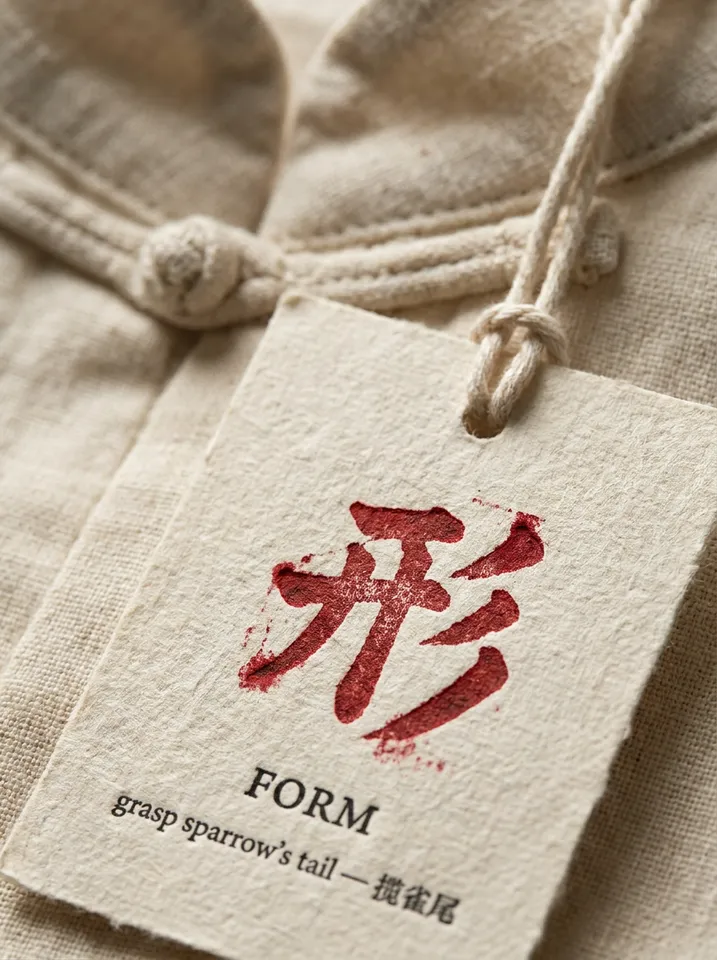
Extreme macro photograph of a cream linen garment tag hanging from a collar by a thin cotton cord. On the tag, a single Chinese character "形" is hand-stamped in cinnabar-red ink, brushstroke style, slightly imperfect like a real hand-carved seal stamp — NOT printed, NOT digital-looking, ink slightly bled into the paper fiber. Below the character, small black serif English type reads "FORM" and beneath that, smaller: "grasp sparrow's tail — 揽雀尾." Soft raking light from the left catching the paper texture and the collar's frog-button stitching behind it. Macro lens, razor-sharp on the ink, shallow depth of field. Palette: cream paper, cinnabar red, ink black.
What to take from itEvery string of text is written out in quotes, each with its own style (a hand-stamped red character, small black serif type) and a place on the tag. The surface is described too: paper fibre, raking light, a stamp that looks cut by hand.
Check the resultAll three lines of text are legible in this take, including the small line and the Chinese characters. It is a single take, and Google notes that text in other languages can contain mistakes, so have a reader of that script check it before you publish.
4. A material up close
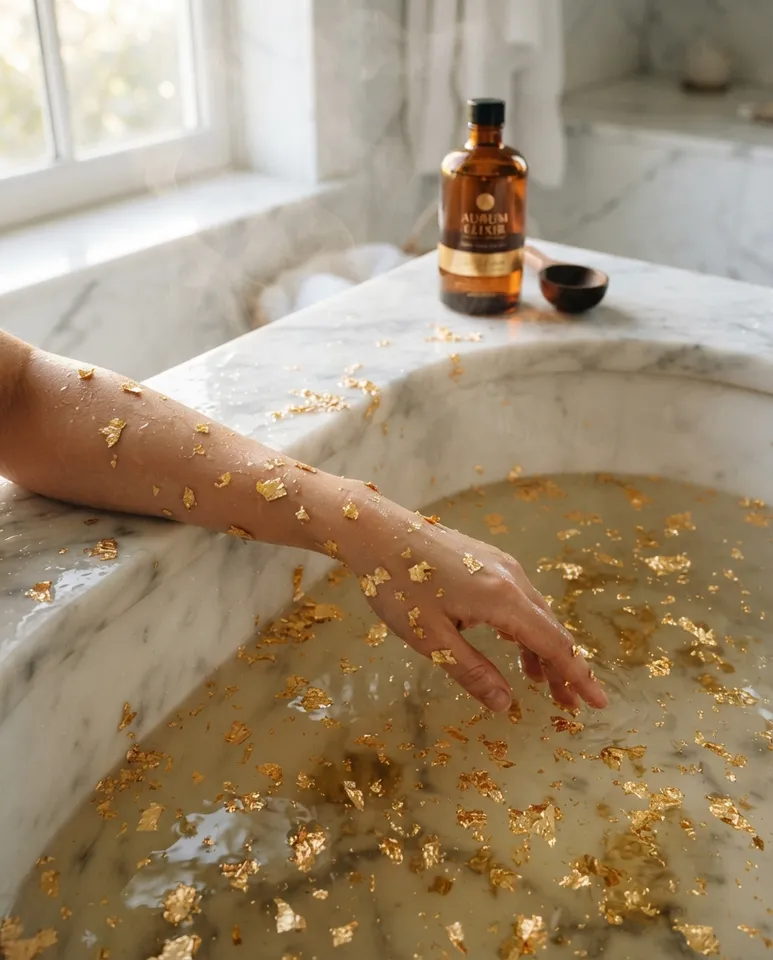
A deep white marble basin filled with warm clear bath oil, hundreds of loose 23k gold leaf flakes suspended and drifting in it, some clinging to the wet marble rim. One forearm resting on the edge, gold flakes stuck to wet skin. Overhead three-quarter angle, 85mm. Steam catching the window light. A glass bottle of amber oil standing on the marble ledge, gold band on the label.
What to take from itThe prompt is about what the material does: flakes suspended in the oil, flakes clinging to the wet rim, flakes stuck to wet skin. The camera is one phrase (overhead, three-quarter, 85mm) and the light is a detail inside the scene (steam catching the window light).
Check the resultThe prompt asked only for a gold band on the bottle's label, so the model wrote its own wording. This take reads AURUM ELIXIR, with smaller lines under it that are not readable.
5. An empty room with space to spare
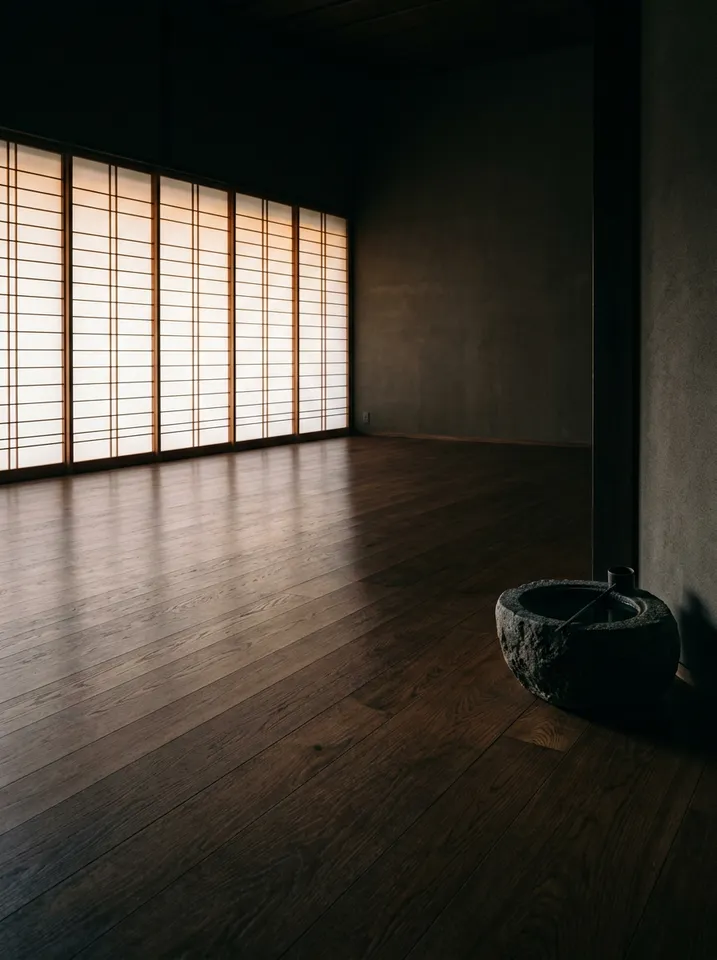
A minimalist wood-floored practice hall at first light, one wall made of rice-paper panels glowing with soft dawn light. Completely empty, no people, no objects except a single low stone basin near the entrance. Shot on Hasselblad medium format, 50mm lens, natural window light only. Palette: rice-paper cream, warm oak, ink-black shadow. Vast negative space. Editorial stillness, no motion, no text overlay in this frame.
What to take from itEmptiness is asked for in words: "Completely empty", one named object, and "Vast negative space". Camera, light source and a three-colour palette are each one short phrase.
Check the resultApart from the stone basin the room is empty and there are no people, as asked.
6. An overhead desk still life
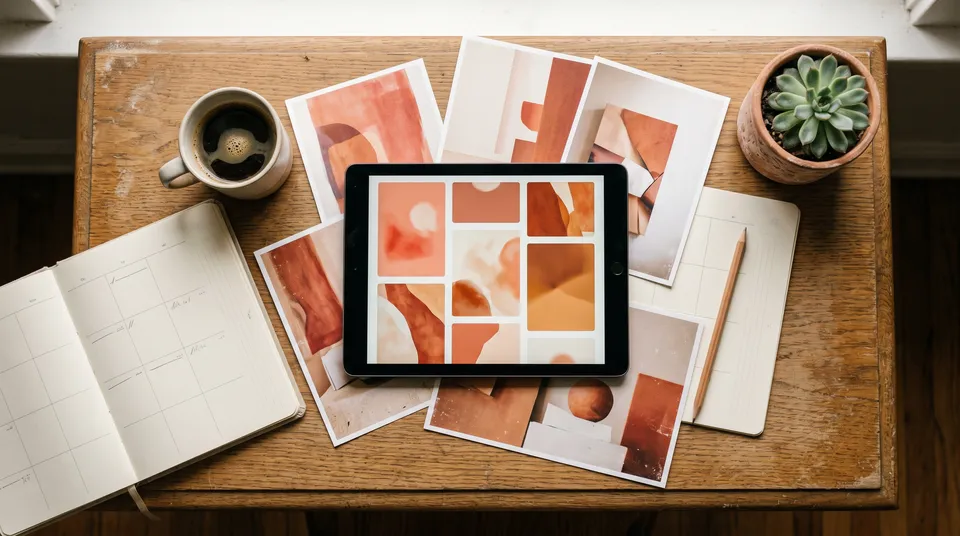
Overhead editorial photograph of a creator's desk workspace. A tablet lies flat on a wooden desk displaying a simple pin-board style grid layout of abstract colorful image blocks in warm coral, red-orange, and cream tones (no legible text or logos on screen, just soft color blocks and shapes). Scattered around the tablet are several printed photo proofs face-up, slightly overlapping, in the same warm coral and terracotta palette, along with an open desk calendar/planner page with visible grid lines suggesting a content schedule (no legible text, just faint ruled lines). A cup of coffee, a pencil, and a small potted succulent sit at the edges of the frame. Soft natural window light falls diagonally across the scene from the upper left, casting gentle realistic shadows. Shot straight-down top-down angle, shallow depth of field softening the desk edges, photographed on a mirrorless camera with a 35mm lens, realistic film-like color grade, warm and inviting mood. Photorealistic photography, real texture on paper and wood grain, no people in frame, no CGI or 3D render look, no purple or violet tones anywhere, no text or numbers rendered legibly, no logos.
What to take from itThe objects are listed with where each one sits: the tablet flat in the middle, proofs around it, the cup, pencil and plant at the edges. The screen and the pages are told to show shapes and ruled lines, not words. The light, the angle and the lens come after the objects.
Check the resultThe prompt ends with a long list of things to leave out. This take has no readable text, logos or purple tones. Google's advice is to describe what you want instead of what to avoid, so try that wording first and keep the list for a second attempt.
7. A wide scene in a room
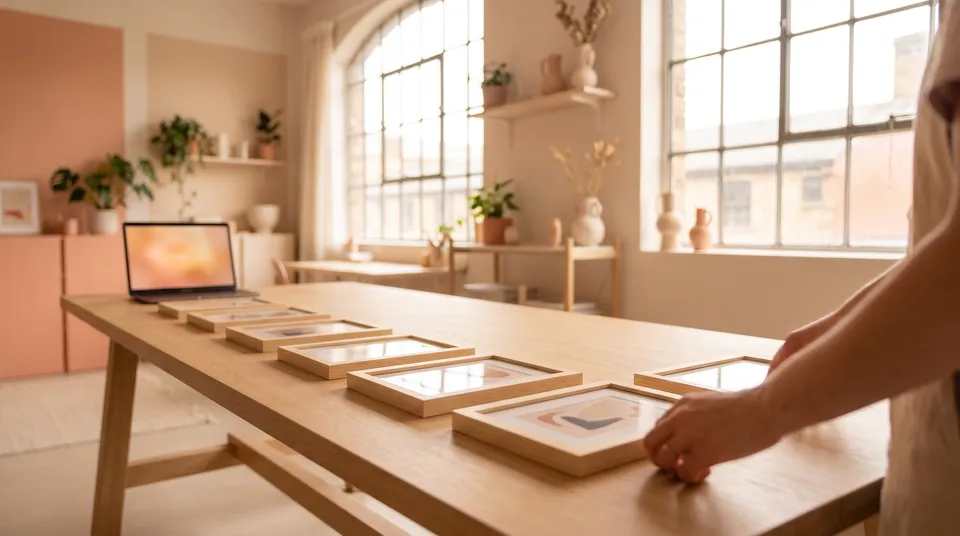
Editorial photograph of a bright modern creative studio: a long clean light-wood table with a neat sequential row of identical small framed prints being laid out like an assembly line of content, a laptop at the far end glowing softly. Warm daylight from tall windows, minimal and organized, shot on a real camera, shallow depth of field. Warm neutral and soft coral palette. No people's faces, no purple or violet tones, no readable text, no CGI look.
What to take from itAn idea carries the scene: prints laid out "like an assembly line of content". The row, the table and the laptop give it a shape, and the palette is two named families, warm neutral and soft coral.
Check the resultThe prompt said no faces, not no people: a hand and forearm enter at the right edge of the frame. Say "no people" if you want none.
8. Motion and room for type
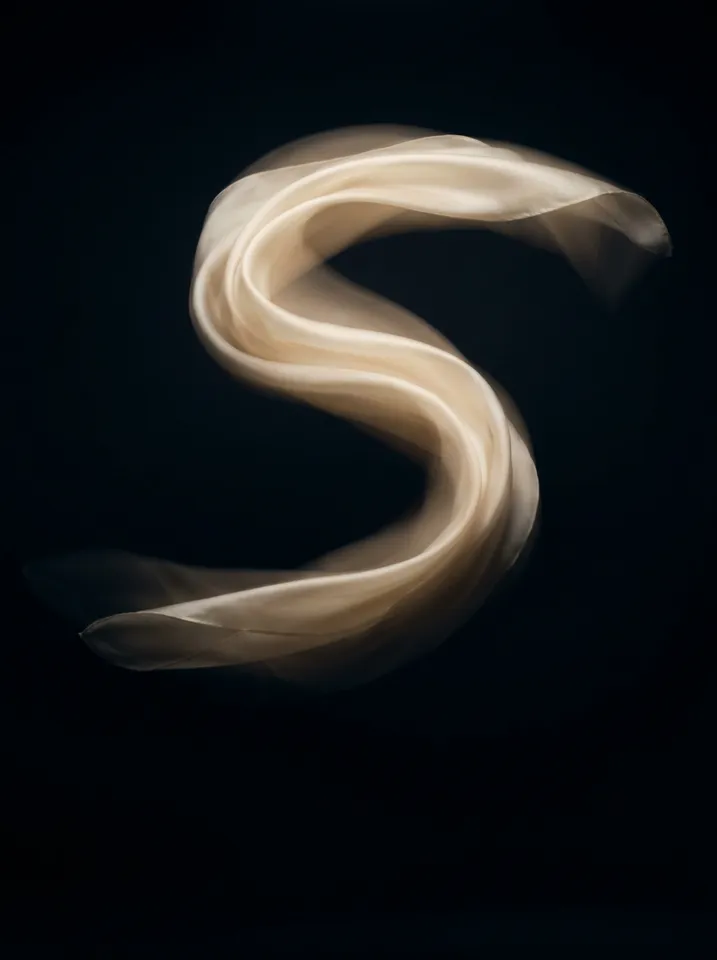
A long cream silk scarf caught mid-motion in the air, thrown by an unseen hand, captured with deliberate long-exposure blur tracing the circular arc of the tai chi "cloud hands" movement — the fabric curves in a soft S-shape through the frame. Flat seamless ink-black backdrop, completely empty otherwise. Soft single-source overhead light catches the silk's sheen, natural falloff into shadow at the edges. Shot on Hasselblad medium format, 100mm lens, slow shutter for the fabric trail, camera locked on tripod. Palette: ink black, cream silk, no other color. Vast negative space, ample room lower third for type.
What to take from itMotion is described the way a photographer would set it up: a long-exposure blur tracing an arc, a slow shutter, a locked-off camera. The backdrop is empty, and the prompt says where the type will go: "ample room lower third for type".
Check the resultThe result is the S-shaped trail of the fabric more than a scarf with two clear ends. Decide whether that fits what you need before you build on it.
9. A character in your brand colours
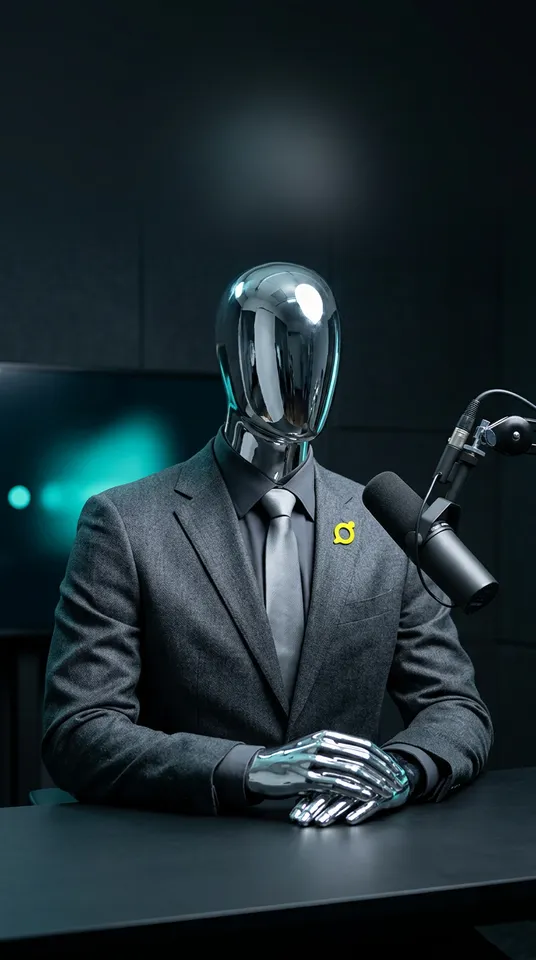
Waist-up vertical shot of an elegant podcast host: featureless polished-chrome mannequin with smooth reflective face, tailored charcoal-grey suit, small electric-yellow #E9F940 enamel lapel pin, hands folded on a dark desk beside a professional broadcast microphone, dark neutral-grey studio #121212, generous empty dark space in the upper third for captions, faint teal #00D4AA dot behind, high-fashion editorial lighting, premium tech-editorial photography, no text Visual style: cinematic.
What to take from itBrand colours go in as hex codes next to a plain description of what carries them (an enamel lapel pin, a dot of light behind), and the background is pinned with a hex code too. The upper third is asked to stay empty for captions.
Check the resultHex codes steer the colour; they do not promise an exact match. Check the result against your swatch before you publish. The last line, "Visual style: cinematic.", is what AIGE adds when the style option is set to cinematic over MCP.
10. The one-line prompt
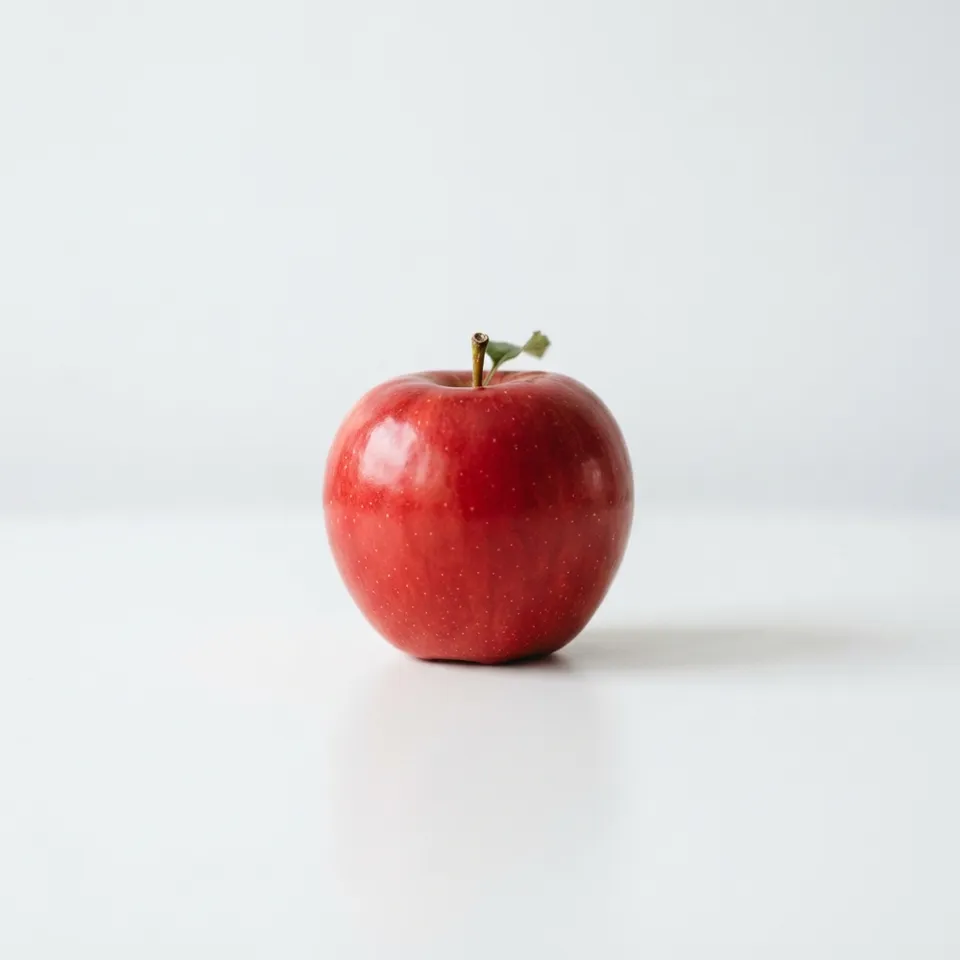
A single red apple sitting on a white table, minimal studio lighting, crisp focus
What to take from itFourteen words are enough for a plain subject. The prompt names no angle, no direction for the light and no backdrop, so the model chose all three.
Check the resultFine for a quick look at a subject, thin as a brief: the angle, the light and the background are left to the model, so a second run can look quite different.
Run one of them on your own subject
Pick the structure that fits your job, swap in your subject and see the credit cost before you press Generate.
Drafting is free. Generating uses credits from a plan; cancel anytime.
What the ten prompts have in common
Sentences, not tags. Nine of the ten describe the scene in full sentences, and each of the nine names the light. Where the light comes from is spelled out when it matters: "soft diffused light from top left" (1), "soft raking light from the left" (3).
Exact words are written out, with the lettering described. In prompt 2 the word is in capitals with its typeface and colour; in prompt 3 each line is in quotes with its own style and its place on the tag.
Room for type is asked for. "Vast negative space" (5 and 8) and "generous empty dark space in the upper third for captions" (9) leave an area clear, so a headline can go there later.
Colour is named. Prompts 3, 5 and 8 list a palette in words; prompt 9 uses hex codes for the pin, the glow and the background.
A short prompt works for a plain subject. Prompt 10 is a single line. The model picked the angle, the light and the background, so use it to look at a subject, not to brief a shoot. The prompt card on the Nano Banana guide has Google's formula, its editing templates and the sources behind them.
What each of the ten prompts costs to run once
Credits are what AIGE charges today for that model and size. Dollars are the credits at the sticker rate of the cheapest plan that can run it. Running all ten once is 110 credits.
More on Nano Banana in AIGE
Frequently asked questions
What makes a good Nano Banana prompt?
Describe the scene in sentences: the subject, where it sits, the light and which way it comes from, the camera or lens, and the palette. Put words that must appear in the image in quotes and describe the lettering. Nine of the ten prompts on this page are written as sentences that describe the scene and name the light; the tenth is a one-line prompt kept to show what a short prompt leaves to the model. Google's own prompting guides give the same advice, and the prompt card on the Nano Banana guide lists them with their sources.
How much does it cost to run these Nano Banana prompts in AIGE?
4 to 20 credits an image, depending on the model and size each prompt ran on. Running all ten once costs 110 credits. There is no free generation: plans start at $8.55 a month, and the studio shows the credit cost before every run.
Can I copy these prompts?
Yes. Copy a prompt as it is, or keep its structure and change the subject. It will not make the same image: every run makes a new one, so make a few and keep the best.
Which Nano Banana model should I run a prompt on?
Each card names the model it ran on. Nano Banana 2 is the everyday choice and costs less than Pro at 1K and 2K; Pro costs less than Nano Banana 2 at 4K; Nano Lite is the cheapest and makes one size. Try the same prompt on two models and keep the image you prefer: results differ by subject.
Does Nano Banana get the text in an image right?
Two prompts here ask for exact words, and both came out readable in the take shown. That is one take each, not a measure of how often it works. Small text is the weak spot: keep key words large, quote them in the prompt and read every character before you publish.
Where do these prompts come from?
From the generation log of AIGE's image account, runs made in July and August 2026. The prompts are copied exactly, and each image is the output of that run. The log does not record who started a run, so this page does not claim a customer made them.